
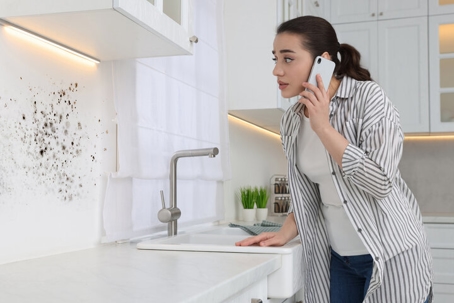
If you’ve had a leak, overflow, or flooding in Sacramento, the clock starts immediately. Mold can begin growing on damp materials within 24–48 hours if water-damaged areas aren’t dried quickly and thoroughly. In many cases, the earliest growth is invisible—happening behind baseboards, under flooring, or inside wall cavities before you ever see a spot.
If you’re dealing with water right now, Good Life Restoration can help you act fast (extraction, drying, and moisture detection) to reduce the risk of secondary damage.
Key Takeaways
- Mold can start growing within 24–48 hours when porous materials stay damp.
- “Water doesn’t mold” — mold grows on wet materials like drywall paper, carpet padding, wood, and insulation.
- Hidden moisture behind walls and under floors is the biggest reason problems come back after DIY drying.
- A musty smell, bubbling paint, staining, or warped baseboards can be early warning signs.
- If you can’t confirm everything is fully dry by 48 hours, professional drying may be the safest move.
- Contaminated water (sewage/floodwater) requires professional handling.
- Verified drying (not just “feels dry”) helps prevent costly repairs and future remediation.
Quick Answer
How long does it take for mold to grow? Mold can begin growing within 24–48 hours after a leak or flooding if materials stay damp.How fast does mold grow after water damage? It can spread over the next several days—often in hidden areas—until moisture is removed and materials are dried to a verified dry state.
How Long Does It Take for Mold to Grow?
Most people expect mold to show up as visible black or green patches. In reality, mold often starts microscopic and out of sight.
Here’s what “start growing” usually means:
- Mold spores (already present in indoor air) land on a damp surface.
- If there’s moisture plus a food source (paper backing on drywall, wood, dust), spores can begin forming colonies.
- Visibility comes later—sometimes days—depending on conditions and where the moisture is trapped.
Bottom line: If drywall, carpet pad, insulation, or wood stayed wet and you’re approaching the 48-hour mark, it’s smart to treat the situation as time-sensitive—especially in Sacramento County water damage scenarios where water can spread under floors or into wall cavities.
How Fast Does Mold Grow?
If you’re searching how fast does mold grow, you’re probably deciding whether you can handle this yourself or need help. Mold growth speed depends on the environment, but it can move from “no visible mold” to “musty and spreading” quickly when moisture persists.
What makes mold grow faster:
- Humidity and dampness: materials that stay wet are the #1 driver
- Temperature: common indoor temperatures can support growth
- Airflow: closed rooms, cabinets, and wall cavities trap moisture
- Porous materials: drywall paper, insulation, carpet padding, and wood hold water
- Hidden moisture: water under floors and behind walls can linger unnoticed
- Dust/organic buildup: dust becomes “food” on damp surfaces
This is why “it feels dry” isn’t the same as “it is dry.” Many people only discover the issue later—then schedule a mold inspection Sacramento visit to locate where moisture remained.
How Long Does It Take for Water to Mold?
A very common question is how long does it take for water to mold—but here’s the accurate way to think about it:
Water doesn’t mold. Mold grows on materials that stay wet.
Materials that become mold-prone quickly when damp:
- Drywall (especially the paper facing)
- Carpet padding (often stays wet even if carpet feels dry)
- Wood baseboards and trim
- Insulation (hard to dry once wet)
- Subflooring under laminate/vinyl/tile
- Cabinets and toe-kicks (water hides in enclosed spaces)
So the “water to mold” timeline is really a wet-material timeline—and that’s why fast drying is the core of water damage restoration Sacramento work.
How Long Does Mold Take to Grow After Water Damage?
If you want a practical timeline, use this breakdown:
Hour 0–6: Water spreads
- Water moves into seams, under baseboards, into carpet pad, and into cabinet toe-kicks.
- Priorities: stop the source (if safe), remove standing water, protect nearby belongings.
6–24 hours: Moisture wicks and hides
- Drywall can wick moisture upward.
- Subfloors and padding can stay saturated.
- This is when professional extraction and controlled drying can prevent bigger repairs.
24–48 hours: Mold risk window
- This is the critical window where mold can begin forming colonies on damp materials.
- If you can’t fully dry affected materials in this window, risk increases—especially in hidden spaces.
2–7 days: Odors and material changes become more common
- Musty odor may appear.
- Paint can bubble; trim can warp; staining can start.
1–2 weeks: Growth may become obvious
- Visible spotting can appear (often in corners, closets, behind furniture).
- Materials can degrade, swell, or delaminate.
Important: Hidden moisture behind walls and under floors can keep feeding growth until it’s found and dried.
Materials Risk Table: What Gets Moldy Fast?
Use this quick table to make better decisions early (always use caution with contaminated water).
Material / Area | Mold Risk | Drying Difficulty | Typical Next Step (General) |
Drywall (paper face) | High | Medium | Dry fast; remove if saturated/soft or swelling |
Insulation | High | High | Often removed if wet (hard to dry thoroughly) |
Carpet surface | Medium | Medium | May be salvageable if cleaned + dried quickly |
Carpet padding | High | High | Often replaced if soaked |
Solid wood trim/baseboards | Medium | Medium | Sometimes salvageable if removed/dried quickly |
Laminate flooring | High | High | Often swells/warps; may require removal |
Tile surface | Low | Low | Dry surface + confirm subfloor/underlayment is dry |
Cabinets/toe-kicks | Medium–High | Medium | Dry + check hidden voids; may need targeted drying |
If you’re unsure what’s actually wet, moisture detection is the fastest way to avoid guessing.
Mold Risk After Common Water Damage Scenarios
Roof leak (often after storms)
What gets wet: attic insulation, ceiling drywall, wall cavities
Why mold can grow fast: insulation holds water; airflow may be limited; damage spreads before you see it.
Slab leak
What gets wet: flooring, subfloor, baseboards, lower drywall
Why mold can grow fast: moisture travels under floors and can remain hidden for days.
Bathroom overflow (tub/toilet/sink)
What gets wet: vanity toe-kicks, drywall edges, flooring seams
Why mold can grow fast: water moves into tight spaces and stays trapped.
HVAC condensation or clogged drain
What gets wet: ceilings, closets, drywall near supply/return, insulation
Why mold can grow fast: slow leaks soak materials silently.
Dishwasher / washing machine leak
What gets wet: cabinets, subfloor, drywall behind appliances
Why mold can grow fast: water spreads under appliances where drying is difficult.
Storm flooding / exterior intrusion
What gets wet: lower drywall, insulation, floors, contents
Why mold can grow fast: larger volume = longer drying time; contamination may be involved.
Signs Mold May Be Growing (Even If You Don’t See It)
Early warning signs include:
- Musty/earthy odor (closets, behind furniture, near baseboards)
- Discoloration or staining on drywall or ceilings
- Bubbling or peeling paint
- Warped baseboards or swelling trim
- Carpet that smells “off” after drying
- Persistent dampness in cabinets/toe-kicks
- Increased irritation for sensitive individuals (use this as a cue to inspect, not a diagnosis)
What to Do Immediately After Water Damage
First 1 Hour
Do:
- Shut off the water source (valve/main) if safe.
- If water is near outlets or electrical devices, shut power to that area (use caution).
- Move valuables and soft goods to a dry space.
- Start removing standing water (towels / wet vac if appropriate).
Don’t:
- Don’t use electrical devices while standing on wet floors.
- Don’t ignore water under cabinets, behind toilets, or under appliances.
- Don’t assume it will “air dry” fast enough.
First 24 Hours
Do:
- Increase airflow (fans, open interior doors).
- Run A/C or a dehumidifier if available.
- Pull back wet carpet edges; check the pad.
- Remove items that can’t dry quickly (cardboard, some fabrics).
- Document damage with photos.
Don’t:
- Don’t trap humidity by closing the room up.
- Don’t place rugs/furniture over damp flooring.
By 48 Hours
Do:
- Confirm dryness beyond the surface (edges, corners, under flooring transitions).
- Check inside cabinets/toe-kicks and behind baseboards.
- If you can’t confirm it’s fully dry, call for help.
Don’t:
- Don’t paint/seal over damp drywall.
- Don’t keep wet insulation in place.
If you need rapid extraction and drying, Good Life Restoration provides emergency water cleanup Sacramento services to help prevent secondary damage.
If the Water Damage Happened 3+ Days Ago: What Now?
If the leak or flooding happened a few days ago, don’t panic—but don’t ignore it either. Focus on verification.
Do this quick triage:
- Smell check: Any musty/earthy odor in closets, corners, or near baseboards?
- Visual check: Staining, bubbling paint, warped trim, or “shadowing” on drywall?
- Touch check: Any cool/damp feeling along baseboards or flooring edges?
- Hidden areas: Under sinks, behind appliances, inside cabinet toe-kicks, around toilets, near HVAC registers.
- Spread pattern: Did water reach an adjacent room, hallway, or below (if multi-story)?
If you can’t confidently confirm dryness (especially behind walls or under floors), get professional moisture detection and a drying plan before it turns into a larger remediation job.
DIY Drying vs. Calling a Pro in Sacramento
When DIY may be okay
- Small, clean-water spill caught quickly
- Water stayed on non-porous surfaces and didn’t reach drywall, carpet pad, or insulation
- You can fully dry and ventilate within 24–48 hours
When you should call a professional
- Water reached drywall, insulation, carpet pad, subfloor, or cabinets
- You notice musty odor after “drying”
- You suspect a slab leak or slow hidden drip
- The affected area is large or spread across rooms
- Contaminated water (sewage/floodwater) is involved
A commonly referenced guideline is the “10 square feet” rule of thumb for visible mold: small areas may be manageable with careful DIY, but larger areas often justify professional help. (Hidden moisture can make the true affected area bigger than what you see.)
If mold is suspected or confirmed, that’s when mold remediation Sacramento planning matters—especially when moisture remains in building materials.
How We Help: Good Life Restoration
Good Life Restoration helps Sacramento-area properties respond quickly to water damage to reduce downtime and prevent secondary issues.
Typical help includes:
- Emergency extraction + structural drying
- Moisture mapping/detection (including hidden areas)
- Documentation support (photos, moisture readings)
- Coordination guidance when mold is suspected
Prevention Tips to Stop Mold Before It Starts
After cleanup, prevention is about controlling moisture:
- Fix leaks quickly (supply lines, appliance hoses, toilet seals, roof flashing).
- Use bathroom exhaust fans during and after showers.
- Improve airflow in closets/laundry rooms.
- Use a dehumidifier if humidity stays elevated.
- Watch for condensation around HVAC vents and windows.
- Check under sinks and behind appliances regularly.
- Consider a simple moisture meter after an incident.
FAQs (Schema-ready Q&A)
How long does it take for mold to grow?
Mold can begin growing within 24–48 hours when materials stay damp after a leak or flood.
How fast does mold grow?
Mold can spread over days when humidity stays high and porous materials remain wet—especially in hidden spaces like wall cavities and under floors.
How long does it take for water to mold?
Water doesn’t mold. Mold grows on wet materials like drywall paper, carpet padding, wood, insulation, and dust/organic buildup on damp surfaces.
How long does mold take to grow after water damage?
Often 24–48 hours is the critical window. If you can’t dry thoroughly in that time, the risk increases significantly.
How fast does mold grow after water damage?
Mold growth can begin within 24–48 hours, then accelerate across several days if moisture remains (often out of sight).
Can mold grow behind drywall?
Yes. Drywall paper and insulation can stay damp, and wall cavities don’t dry quickly without airflow—making hidden growth possible.
Conclusion
When water damage hits, the best strategy is simple: remove water fast, dry thoroughly, and verify dryness. Mold can begin growing within 24–48 hours on damp materials, and hidden moisture behind walls and under floors is where problems often start.
If you need help now, contact Good Life Restoration.