
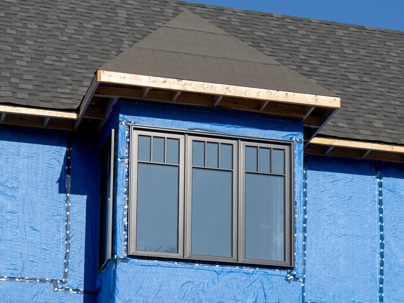
If you've seen a house being built in Sacramento, you've probably noticed that distinctive white or silver material wrapped around the structure before siding goes on. That's house wrap, and Tyvek is the name most people know. But what exactly does it do, and is it worth the investment for your home?
What Is Tyvek House Wrap?
Tyvek house wrap is a weather-resistant barrier that goes over your home's exterior sheathing and under the siding. Made from high-density polyethylene fibers that are spun and heat-bonded together, it creates a protective layer that stops wind and water from getting into your walls while letting moisture vapor escape.
Think of it as a breathable raincoat for your house. Rain can't get through from the outside, but moisture that builds up inside your walls can escape before it causes mold, rot, or peeling paint.
For Sacramento homeowners, where we get hot, dry summers and occasional winter rain, this balance matters. Your walls need protection from those seasonal storms without trapping summer heat or moisture inside.
What Does Tyvek House Wrap Actually Do?
House wrap serves three critical jobs that protect your home and save you money:
Blocks Air Infiltration: Small gaps in wall seams let outside air sneak in, making your heating and cooling system work harder. Tyvek seals these gaps, which means lower energy bills and more consistent indoor temperatures.
Sheds Water: Rain that gets behind siding needs somewhere to go. Properly installed Tyvek directs water down and out of the wall cavity instead of letting it soak into wood sheathing. This prevents the kind of hidden water damage that leads to expensive dry rot repairs.
Allows Drying: Unlike plastic sheeting, Tyvek's microporous structure lets water vapor pass through. If moisture does get into your walls from indoor humidity or a small leak, it can dry out instead of being trapped. This prevents mold growth and keeps your wall materials healthy for decades.
Is Tyvek House Wrap Waterproof?
Here's where things get specific: Tyvek is water-resistant, not waterproof. It blocks liquid water from rain and snow, but it's not designed to be a standalone waterproofing membrane like what you'd use on a foundation.
The real protection comes from proper installation. Tyvek works as part of a complete system that includes overlapping the material shingle-style, sealing seams with compatible tape, and integrating window and door flashing correctly. When all these pieces work together, water stays out while vapor can still escape.
One important note: Tyvek shouldn't sit exposed to sun and weather for too long. The manufacturer recommends covering it with siding within 120 days. After that, UV exposure can degrade the material and reduce its effectiveness.
What Is Tyvek Made Of?
Tyvek is manufactured from high-density polyethylene (HDPE) fibers. DuPont uses a process called flashspinning, where these fibers are spun extremely fine and then bonded with heat and pressure, creating millions of microscopic pores.
This non-woven structure is what makes Tyvek different from cheaper alternatives. Because the fibers are randomly arranged rather than woven in a pattern, the pores stay stable even when the material is stretched or stressed. That stability means consistent performance over time, unlike perforated wraps where the holes can widen under wind load.
When Should You Use Tyvek House Wrap?
Tyvek makes sense for several types of projects in Greater Sacramento:
- New home construction: It's the standard weather barrier for modern wood-frame buildings
- Siding replacement: When you're removing old siding, installing new wrap protects fresh sheathing
- Dry rot repair: After replacing damaged wood, Tyvek prevents future moisture problems
- Window and door replacement: New openings need proper flashing integrated with house wrap
- Whole-house renovations: Adding Tyvek during major exterior work upgrades your home's durability
It pairs well with fiber cement siding, engineered wood, wood lap, and stucco over sheathing. If you're planning exterior painting, siding work, or addressing water damage, Tyvek should be part of the conversation.
Tyvek vs. Store Brand House Wrap
Walk into Home Depot or Lowe's and you'll see Tyvek sitting next to cheaper alternatives that look similar. So what's the real difference?
Construction: Store brands often use woven polypropylene with tiny holes poked through to allow breathing. Tyvek uses non-woven HDPE with natural micropores. That means store wraps have to compromise—making the holes big enough to breathe means water and air can also get through.
Performance: In independent testing, Tyvek shows significantly better water holdout and vapor permeability compared to perforated wraps. It also handles wind and installation stress better because tears don't run like they do in woven materials.
System Support: Tyvek comes with compatible tapes, flashings, and detailed installation guides. Many store brands leave you to figure out which tape works or how to flash windows correctly.
When Budget Brands Work: For simple projects in dry climates with short construction timelines, basic wraps can be acceptable. But in Sacramento, where proper drying and long-term durability matter, the upgrade to Tyvek usually pays for itself.
The price difference might be $200-300 for an average house, but that's small compared to the cost of repairing water damage later.
Woven House Wrap vs. Tyvek (Non-Woven)
This comparison matters more than most homeowners realize:
Woven wraps are made from plastic threads woven like fabric. They can be strong in one direction, but they tear easily, and their perforated holes can let both water vapor and liquid water through. Under wind pressure, those holes can widen, reducing the wrap's ability to shed rain.
Non-woven Tyvek has fibers arranged randomly and bonded together. This creates stable pores that won't change shape. The material breathes consistently while maintaining excellent water resistance.
For humid climates or homes that need to handle moisture effectively, non-woven wraps like Tyvek are the better choice. They provide reliable drying without sacrificing water protection.
What's Better Than Tyvek House Wrap?
The honest answer: a complete system, properly installed, usually matters more than the brand name.
Tyvek is excellent, but performance depends on proper installation—correct overlaps, compatible tapes, proper flashing at windows and doors, and trained installers who follow the details. A cheaper wrap installed perfectly can outperform Tyvek installed poorly.
That said, some specialty products exist for specific needs:
- Drainable wraps (like Benjamin Obdyke HydroGap) have built-in spacers that help water drain behind siding
- Self-adhered membranes (like Henry Blueskin) stick directly to sheathing for excellent air sealing
- Fluid-applied barriers create seamless protection but require careful application
For standard wood-frame construction in Sacramento, Tyvek with proper detailing remains the proven, cost-effective solution. It's been tested in thousands of homes over decades, and when installed correctly, it delivers reliable performance.
Cost for Sacramento Projects
Material costs for Tyvek typically run $0.15-0.25 per square foot, with a standard 9' x 150' roll covering about 900-1,000 square feet of wall area. For a typical single-story Sacramento home with 1,500 square feet of exterior wall, you're looking at $300-500 in material alone.
Total installed cost, including labor, tape, flashings, and any sheathing repairs, varies based on wall complexity, number of openings, stories, and access. As part of a complete siding project, house wrap is usually a small line item with an outsized impact on long-term performance.
Good Life Construction provide free estimates after a site visit, so you know the exact cost for your specific project before any work begins.
Common Installation Mistakes to Avoid
Most house wrap failures come from a few recurring errors:
Reversed laps that direct water into the wall instead of down and out are surprisingly common. Every horizontal seam should overlap like roof shingles.
Staples without caps tear the material and create leak paths. Use proper cap fasteners designed for house wrap.
Missing or incompatible tape means air and water will get through seams. Use the manufacturer's tape system.
No window flashing is asking for rot around openings. Every window and door needs proper flashing integrated with the wrap.
Ignoring tears during construction leads to leaks. Patch any damage immediately with compatible tape.
Frequently Asked Questions
Does Tyvek add insulation value?
No. Tyvek doesn't have a meaningful R-value. Its job is to control air and water, which helps your existing insulation perform as rated.
Do I need a vapor barrier with Tyvek?
It depends on your climate and wall assembly. In most California construction, the vapor control is on the interior side of the wall. Tyvek is vapor-permeable, not a vapor barrier. We'll specify the right approach for your project.
Can Tyvek be painted?
No. It's not a finish surface. Tyvek should always be covered with siding or stucco.
How long can it stay exposed?
Follow the 120-day limit. The sooner you cover it with cladding, the better.